
Why Smart People Make Terrible Decisions When They're Upset
Intelligence does not protect you at the exact moments decisions matter most. Here is the hijack mechanism, and the skill that actually interrupts it.
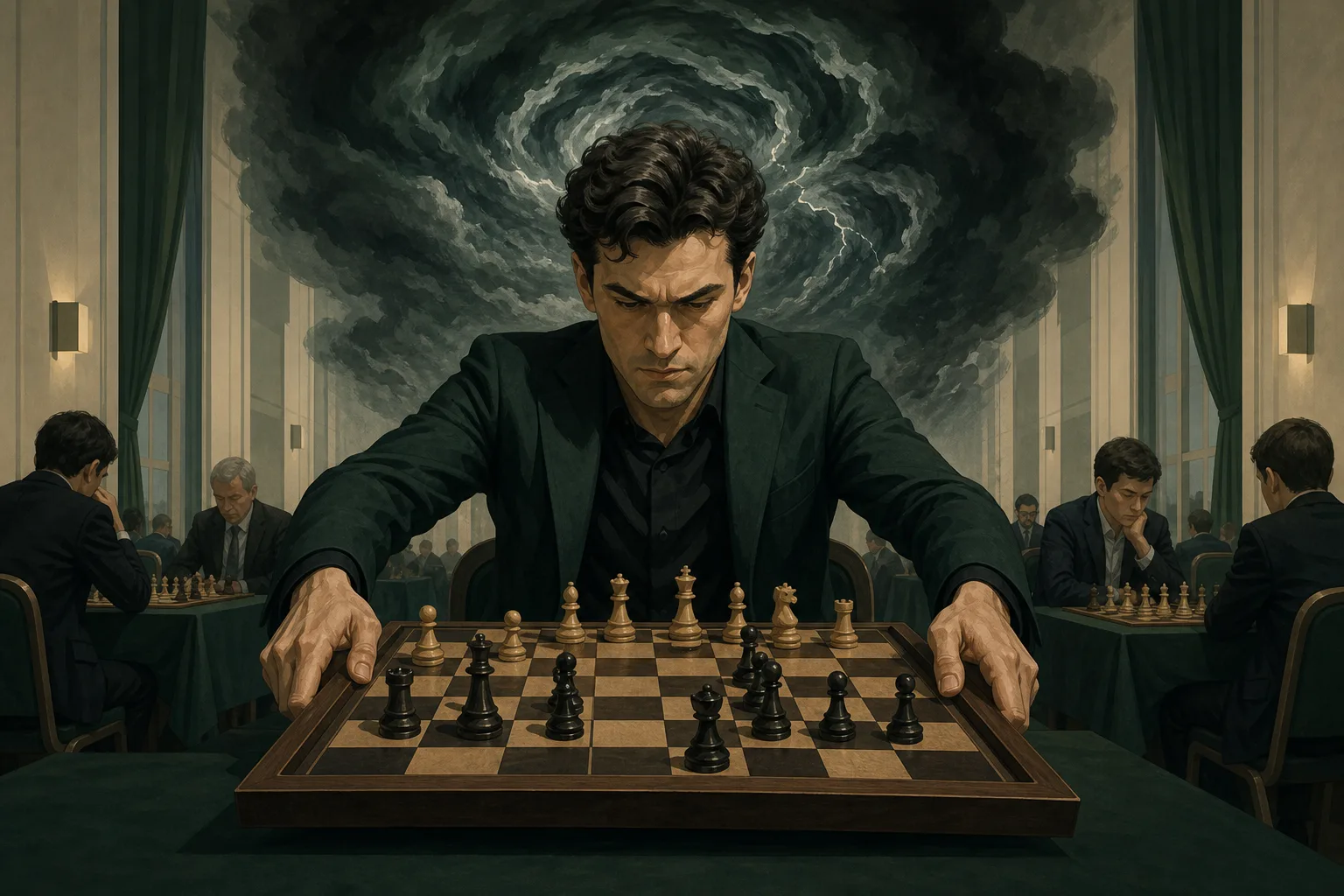
The email that ended the partnership was written by a person with two advanced degrees. The marriage-ending sentence was delivered by someone who negotiates contracts for a living. The investment sold in a panic at the exact bottom belonged to an analyst whose job was literally to know better.
Ask any divorce lawyer, HR director, or financial advisor: their files are full of brilliant people, because intelligence provides no immunity at the moment it is needed most. Smart is a fair-weather instrument. The storm runs on different physics.
The hijack has a mechanism
When something registers as a threat, a betrayal, an insult, a loss, the brain's threat circuitry responds before conscious thought finishes loading. Stress physiology ramps: heart rate spikes, attention narrows to the threat, and the reflective system that does your careful thinking gets functionally downgraded. Psychologists have called the extreme version an emotional hijack, and its defining feature is that your intelligence is not merely unused during it. It is conscripted.
That is the part smart people underestimate. A powerful intellect in a hijacked state does not sit quietly. It goes to work for the emotion: generating justifications, marshaling selective evidence, composing the devastating paragraph. Anger with a high IQ writes better emails, which is worse. The analyst mid-panic does not stop analyzing, he analyzes his way to a beautifully reasoned catastrophe, every step logical, the premise supplied by fear.
This is why raw intelligence and decision quality diverge so sharply under emotion: thinking is only as good as the state it runs in, and smart people have spent their lives trusting the thinking without ever auditing the state.
The skill that interrupts it
The interruption point is embarrassingly early and simple, which is exactly why it gets skipped: you cannot regulate a state you have not noticed you are in.
Emotional self-awareness, the capacity to register "I am flooded right now" while it is happening, is the hinge skill. Research on emotional granularity finds that people who can name their states precisely, humiliated rather than bad, anxious rather than off, regulate measurably better; naming engages the reflective system and takes the edge off the reactive one. From there, regulation has real techniques: the deliberate pause, physiological down-shifting, the pre-commitment rules that wise institutions build precisely because individuals cannot be trusted mid-surge, no decisions after midnight, no email while angry, twenty-four hours before accepting or quitting anything.
But notice what all of these require: catching the state early. The person who recognizes flooding at minute one has options. The person who recognizes it in retrospect has apologies.
Your hijack profile is specific
Here is what generic advice misses: people differ enormously, and measurably, in this machinery. How fast you flood, what specifically triggers you, whether you can name states as they arrive, whether your recovery takes minutes or days, whether you suppress until you detonate or vent until you exhaust everyone. These dimensions of emotional intelligence, self-awareness, regulation, and their interplay under stress, form a profile as individual as a fingerprint.
The high performer whose only weak component is regulation-under-criticism will lose years of reputation in single flashes. The person with low interoceptive awareness makes their worst calls calmly, never feeling the fear steering the spreadsheet. Same catastrophes, different mechanisms, different fixes.
Which is why the first serious move is measurement: a structured emotional intelligence assessment that scores the components separately and shows you where your particular circuit breaks. Smart people, of all people, should appreciate this, you would never optimize a system without profiling it first.
The next hijack is already scheduled. Something will land wrong this month, and a state will make a bid to borrow your intelligence. Whether it succeeds depends on machinery you have never seen. Go look at it.
Turn insight into a personal profile
See how this pattern shows up in you
Take a related BeliefScope assessment for a structured result and an optional deeper report.
Related Insights
The Emotional Skill That Predicts Success Better Than IQ (Most People Never Train It)
Decades of research point to one trainable capacity that outperforms raw intelligence in careers and relationships. Almost nobody knows their score.

You Can Read the Room. But Can You Read Yourself?
Plenty of socially gifted people are strangers to their own inner state, and it quietly costs them everything. Test the skill nobody sees you use.

The Difference Between Feeling Your Feelings and Drowning in Them
"Feel your feelings" became the era's advice, but nobody explains the line between healthy processing and rumination. The line exists, and it is learnable.