
You Can Read the Room. But Can You Read Yourself?
Plenty of socially gifted people are strangers to their own inner state, and it quietly costs them everything. Test the skill nobody sees you use.

You know the type, you might be the type. Reads a meeting like a weather report: who is checked out, who is furious behind the smile, which joke will land and which will die. Friends call them perceptive. Colleagues route delicate situations through them. Their social radar is genuinely excellent.
And yet. Ask this person what they are feeling, right now, in one word, and watch the system crash. "Fine?" Ask why they have been irritable for three weeks, why they cannot sleep before ordinary Tuesdays, why they said yes to the thing they dreaded, and you get analysis, stories, deflection, anything but a reading. The radar points outward only.
Emotional intelligence research treats these as separate capacities: social awareness, reading others, and self-awareness, reading yourself. Popular culture assumes they travel together. They do not, and the gap between them may be the most expensive blind spot a capable person can have.
How the outward radar drowns the inward one
The imbalance usually has a history that makes sense. If you grew up somewhere unpredictable, reading the room was survival: the parent's mood at the door, the shift in tone that preceded trouble. Attention trained outward, permanently, while your own inner state, useless for surviving other people, went unmonitored. Others learn it professionally: service, medicine, management, sales, years of jobs that pay for external reading and penalize inward attention.
The result is a strange machine: exquisitely calibrated to everyone's feelings except its own. Psychologists note that low interoceptive attention, weak perception of your own internal signals, does not stop the signals. It just removes the labels. The feelings still run the machinery. You just do not get the memo.
What the gap costs
Decisions made by unfelt feelings. The unreadable self still votes. You decline the opportunity and call it pragmatism, the unfelt part was fear. You take the job that impressed everyone and cannot explain the flatness that follows. Research on decision-making shows emotion is not optional in choices, people cut off from their feelings do not become rational, they become lost. The question is only whether the feelings operate labeled or unlabeled.
The body sends the memo instead. Unread emotional states have a documented habit of going somatic: tension, gut trouble, the 3 a.m. wakefulness, exhaustion with no medical explanation. The signal always gets delivered. The only choice is the format.
Intimacy hits a ceiling. Partners of outward-readers report a specific loneliness: being perfectly understood by someone who cannot be reached. You can read their needs forever, but closeness eventually requires traffic in the other direction, and there is nothing to send if you cannot read your own state well enough to share it.
The delayed detonation. People who miss their own signals do not feel less anger or grief. They feel it late, all at once, after months of unregistered accumulation, and everyone around them calls it "out of nowhere."
Testing the direction you never test
Here is the uncomfortable part: the outward-reader's blind spot protects itself. Being good with people generates constant social proof of emotional intelligence, so the inward gap never gets suspected, much less measured. You ace every emotional test that life administers publicly and fail the private one nobody grades.
A structured EQ assessment grades it. It measures the components separately, self-awareness, self-regulation, social reading, relationship management, wellbeing, and shows you the shape of your particular machine. For outward-readers, the profile is often a revelation: one towering bar, one crater, and suddenly the irritability, the flatness, the 3 a.m. ceiling-staring all have an address.
You have spent years reading everyone in every room. Twenty minutes of honest answers, and you finally get to read the one person you have been skipping.
Turn insight into a personal profile
See how this pattern shows up in you
Take a related BeliefScope assessment for a structured result and an optional deeper report.
Related Insights
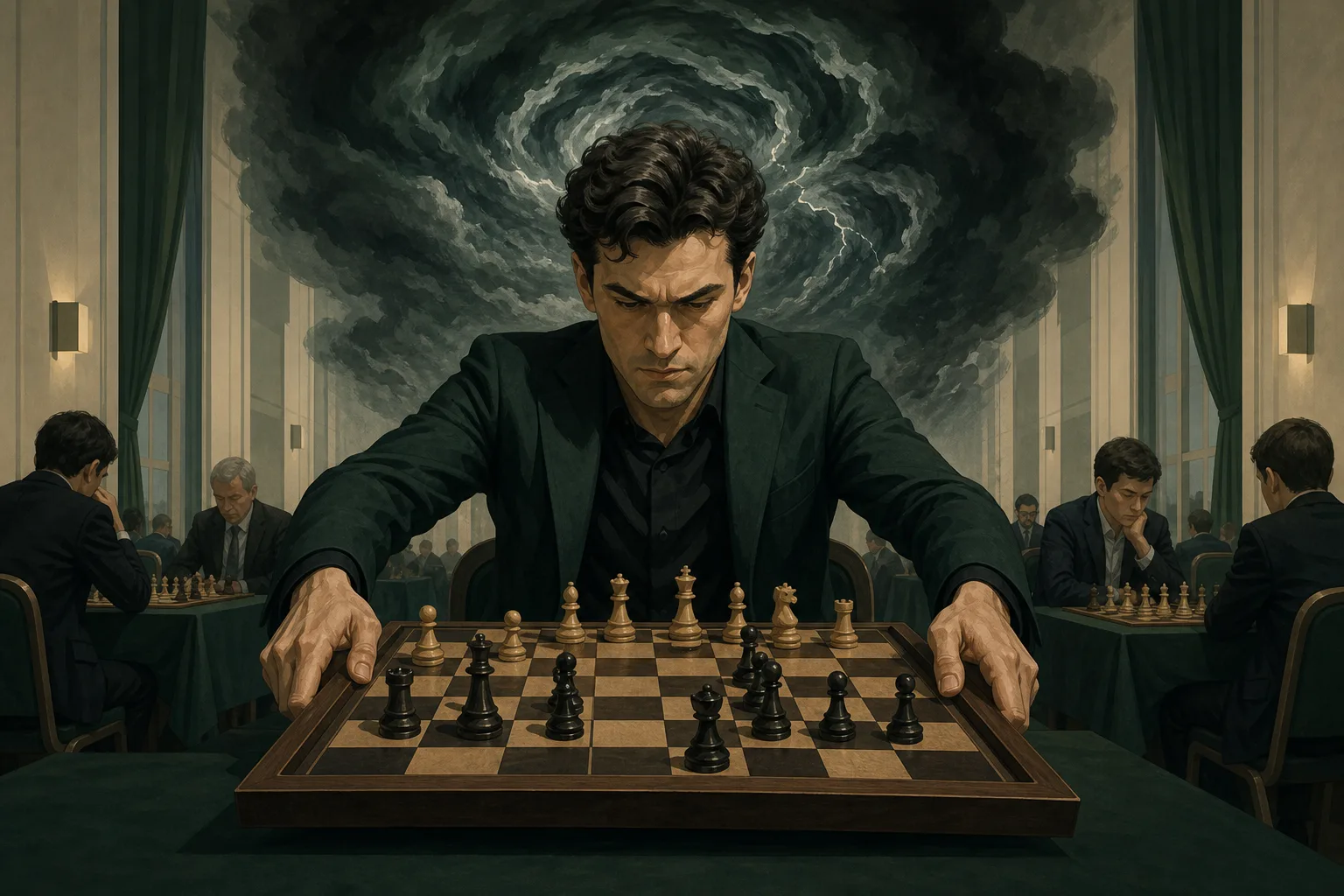
Why Smart People Make Terrible Decisions When They're Upset
Intelligence does not protect you at the exact moments decisions matter most. Here is the hijack mechanism, and the skill that actually interrupts it.
The Emotional Skill That Predicts Success Better Than IQ (Most People Never Train It)
Decades of research point to one trainable capacity that outperforms raw intelligence in careers and relationships. Almost nobody knows their score.

The Difference Between Feeling Your Feelings and Drowning in Them
"Feel your feelings" became the era's advice, but nobody explains the line between healthy processing and rumination. The line exists, and it is learnable.