
How to read your personality test results without overthinking them
A practical guide to interpreting personality test results as useful self-reflection, not fixed identity labels.

Personality tests are most useful when you treat them as a mirror, not a verdict. A result can name patterns you already sense, reveal blind spots, and give you language for conversations about work, relationships, and self-development.
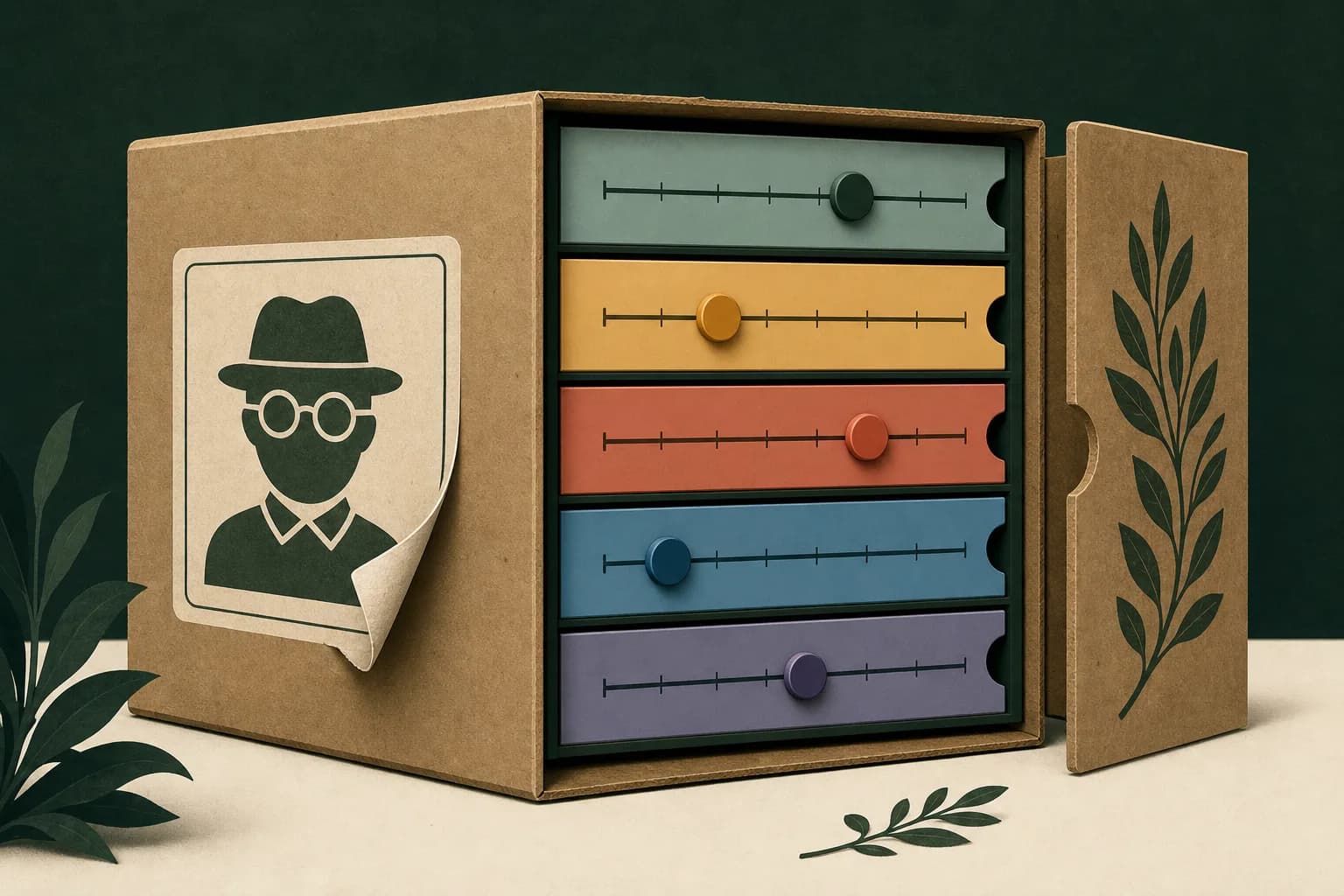
The mistake is turning a score into an identity. A high or low trait score is not a box. It is a clue about what you tend to notice, prefer, avoid, or repeat.
Start with patterns, not labels
Before you decide whether a result is "accurate," ask where it shows up in ordinary life. Does the pattern appear at work, with friends, under stress, or only in certain environments?
Good interpretation is specific:
- "I am more cautious when the stakes feel unclear."
- "I need more recovery time after intense social settings."
- "I become direct when I am trying to protect the outcome."
Those statements are more useful than a single label because they point toward choices you can actually make.
Look for useful tension
The most interesting part of a result is often the tension between dimensions. Someone can be highly curious and still prefer structure. Someone can be warm and still avoid conflict. Someone can value independence and still need reassurance.
When two scores seem to pull in different directions, do not rush to resolve them. That tension may explain why you behave differently depending on the setting.
Treat low scores as information
A lower score is not automatically a weakness. It can mean a trait is less central to how you operate, or that you use it selectively.
For example, lower novelty-seeking can support consistency. Lower assertiveness can support patience. Lower emotional reactivity can support steadiness, while also making it easier to miss subtle signals from yourself.
Use results as prompts
After reading a result, choose one practical question:
- What setting brings out this trait most clearly?
- What does this trait help me do well?
- Where does it cost me energy or create friction?
- What would a small adjustment look like this week?
That is where self-knowledge becomes useful. The goal is not to become a different person. The goal is to understand your defaults well enough to use them with more intention.
Keep the right frame
BeliefScope tests are for self-reflection and education. They are not clinical assessments, diagnoses, or instructions for major life decisions.
Use your result as a starting point for curiosity. If something feels emotionally heavy or connected to mental health, relationships, or safety, bring it to a qualified professional rather than trying to solve it through a quiz result alone.
Turn insight into a personal profile
See how this pattern shows up in you
Take a related BeliefScope assessment for a structured result and an optional deeper report.
Related Insights

Why Some People Never Change (And the Trait That Decides If You Will)
Change is not about willpower. Research points to specific traits that decide who evolves and who repeats the same year fifty times.

The Hidden Motivation Behind Your Worst Habits, According to the Enneagram
Your most stubborn patterns are not random flaws. They are strategies protecting something specific, and naming it is the first real step to changing it.
You've Been Reading Your Personality Type Wrong. Here's What the Numbers Actually Mean
Types are comfortable and mostly fiction. The real science of personality is written in dimensions, and your position on them will surprise you.