
Why Some People Never Change (And the Trait That Decides If You Will)
Change is not about willpower. Research points to specific traits that decide who evolves and who repeats the same year fifty times.
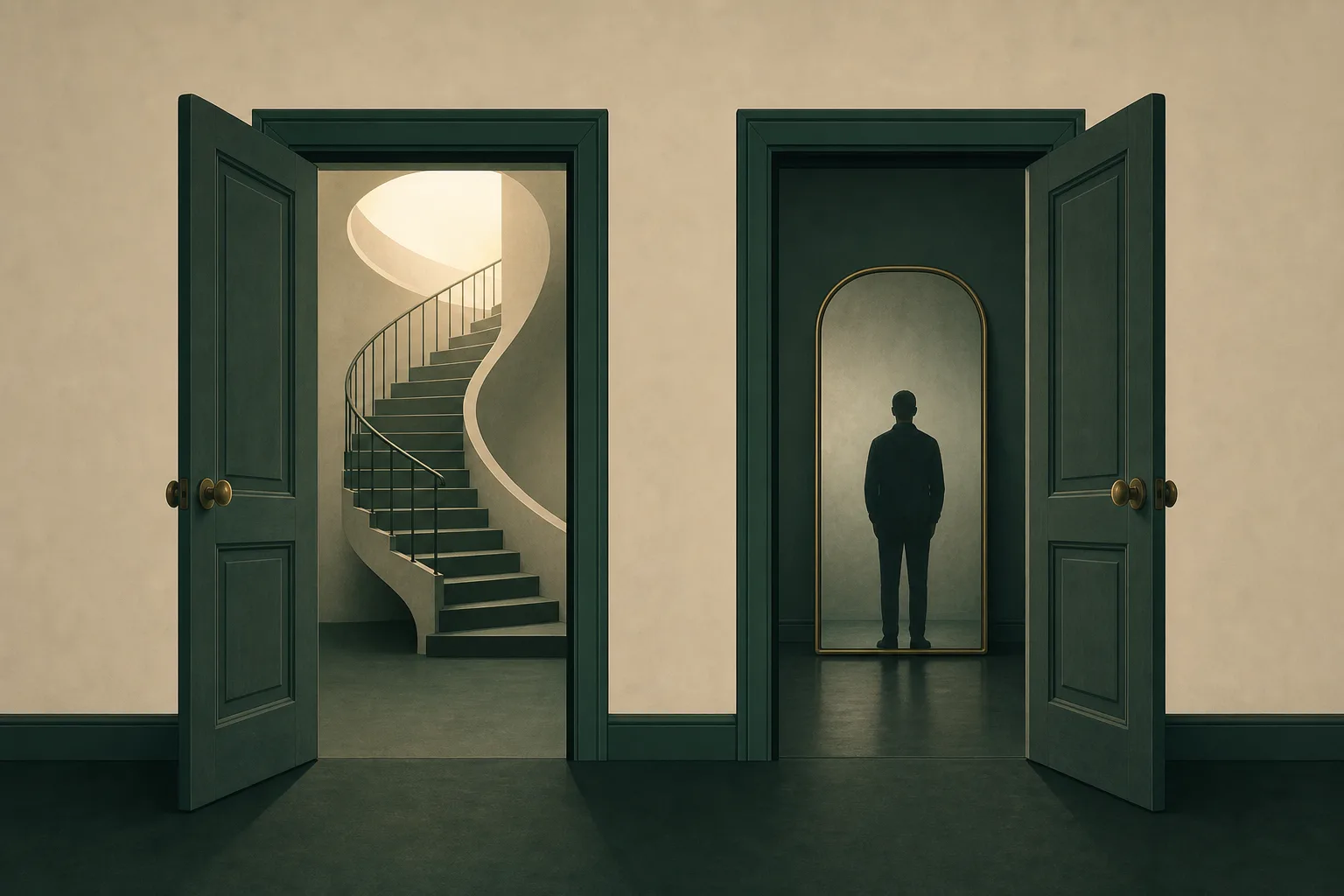
Everyone knows one: the friend who is exactly who they were in 2010. Same grievances, same job complaints, same relationship pattern with a different name attached. And everyone also knows the opposite: the person who is somehow unrecognizable in the best way, who rebuilt their career, their health, their entire way of being, and made it look like a natural process rather than a war.
The comfortable explanation is willpower. The evidence says otherwise. Whether a person changes across a lifetime turns out to be substantially predictable, and the predictors are traits you can measure today.
The myth of the frozen self
First, the good news that most people never hear: personality does change. Large longitudinal studies tracking people for decades show consistent drift, and mostly in a kind direction. On average, people become more conscientious, more agreeable, and less emotionally volatile as they age. Researchers call it the maturity principle.
But averages hide the interesting part: the range. Some individuals transform dramatically. Others are, at seventy, statistically indistinguishable from themselves at twenty-five. The question is what separates the movers from the frozen.
The doorman trait
The strongest candidate is openness to experience, the Big Five dimension governing your appetite for novelty, ideas, and reexamination. Openness functions as the doorman of the personality: it decides which new experiences, perspectives, and uncomfortable facts get in the building at all.
High-openness people encounter disconfirming evidence about themselves and find it interesting. Low-openness people encounter the same evidence and find it wrong. Neither notices the doorman making the call. From inside, it just feels like being right.
But openness alone is not enough, and this is where it gets more interesting. Research on personality change points to a second requirement: enough conscientiousness to act on what gets through the door, and enough emotional stability to hear hard feedback without collapsing. Insight without follow-through produces the person who has read every self-help book and changed nothing. Follow-through without insight produces the person efficiently optimizing a life they never questioned.
Change, in other words, is a trait cocktail. And almost nobody knows their own recipe.
The feedback loop that freezes people
Here is the mechanism that keeps the frozen frozen, and it is worth watching for in yourself. A person low in openness filters out challenges to their self-image. With no challenge, there is no discomfort. With no discomfort, there is no motive to change. With no change, the environment stays constant, which produces no new challenges. The loop is airtight, and it can run for fifty years.
The loop has one vulnerability: measurement. A structured assessment does not argue with you at a dinner party, where the doorman can throw it out. It quietly shows you your own numbers against the population. For many people, seeing an actual low openness score is the first disconfirming fact that ever got past the door, precisely because it arrived as data rather than as an opinion from someone they could dismiss.
Your move
So the question stops being "can people change?" They can, and measurably do. The real questions are personal: How strong is your doorman? Do you have the follow-through trait to act on what you learn? Is your emotional reactivity low enough to look at an unflattering number without deploying the alibi?
There is a version of you at seventy who is either a repetition or an evolution of the person reading this. The traits that decide which one you get are not a mystery. They are five numbers, and they are measurable this afternoon.
The people who never change all have one thing in common: they never found out.
Turn insight into a personal profile
See how this pattern shows up in you
Take a related BeliefScope assessment for a structured result and an optional deeper report.
Related Insights

The Hidden Motivation Behind Your Worst Habits, According to the Enneagram
Your most stubborn patterns are not random flaws. They are strategies protecting something specific, and naming it is the first real step to changing it.
You've Been Reading Your Personality Type Wrong. Here's What the Numbers Actually Mean
Types are comfortable and mostly fiction. The real science of personality is written in dimensions, and your position on them will surprise you.

Why You're Exhausted After Being 'On' All Day: The Introvert Tax Nobody Talks About
That specific tiredness after a social day is not weakness or bad sleep. It has a name, a mechanism, and a surprisingly practical fix.