
You're Not Left or Right. You're Something the Labels Can't See
Six independent axes shape your political mind, and the one-word labels hide five of them. Discover the dimensions that actually define where you stand.
Here is a quick experiment. Answer these three questions honestly.
Should the government guarantee healthcare? Should it be able to read your messages to catch criminals? Should it protect local industries from foreign competition?
If the left-right spectrum were real, your three answers would be predictable from a single position on a line. Left: yes, no, yes. Right: no, yes, no. Or some other consistent pattern.
But when researchers actually collect these answers from large populations, the correlations are far weaker than the labels suggest. Enormous numbers of people want generous social programs and strict limits on state surveillance. Or free markets and open borders. Or economic intervention and traditional social values. These combinations are not rare exceptions. In many surveys they outnumber the "consistent" profiles.
One line, six dimensions
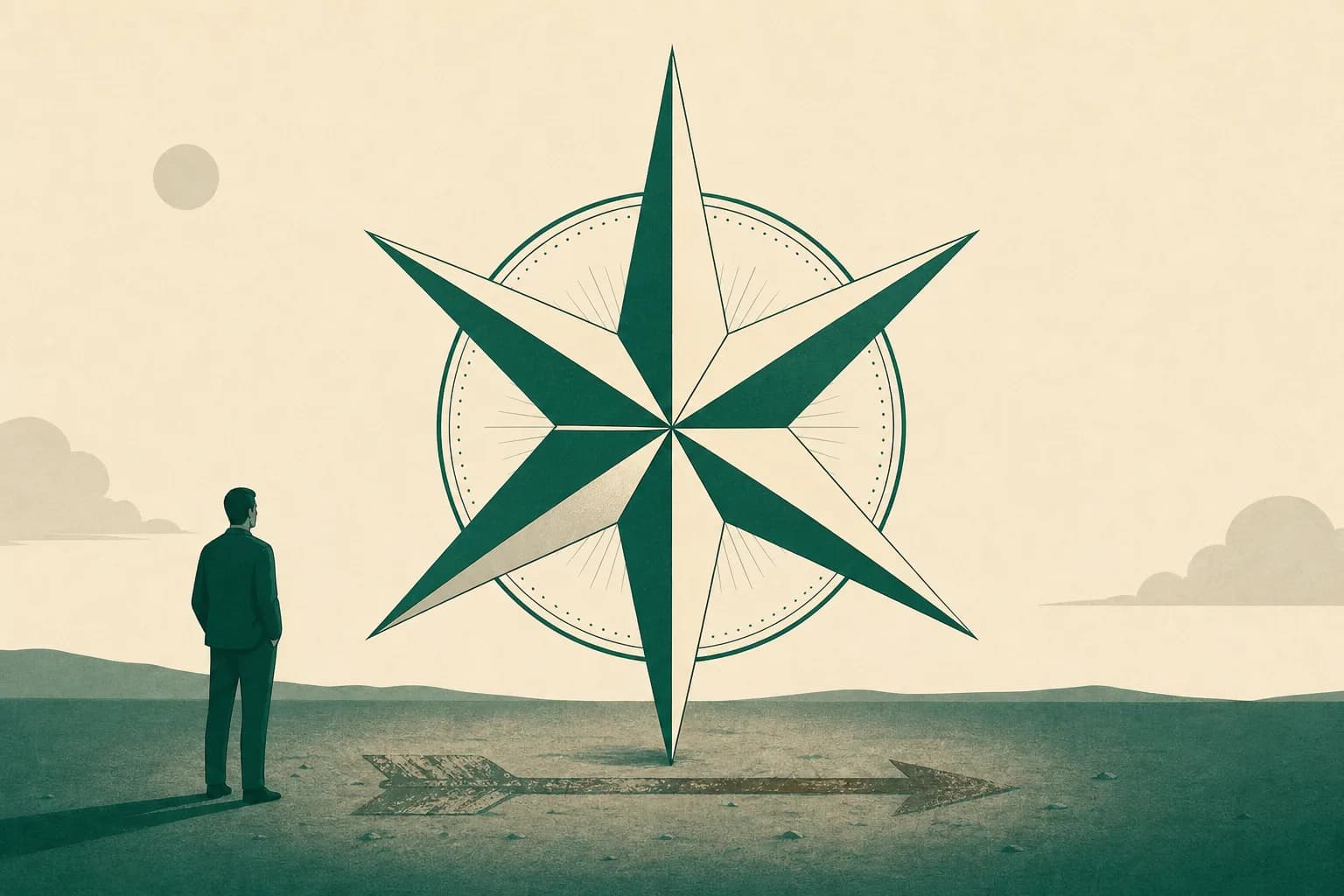
Political scientists who study belief structure keep arriving at the same conclusion: a single axis cannot describe a human being's politics. You need at least half a dozen independent dimensions, including:
- Economic: how much should markets be shaped by collective decisions?
- Liberty: where is the line between public safety and personal freedom?
- Social: how much weight do tradition and social continuity deserve?
- Nation: is your primary political community national or global?
- Authority: is centralized power a tool or a threat?
- Progress: is change something to accelerate or to manage carefully?
These axes are largely independent. Knowing your position on one tells an observer surprisingly little about your position on the others. Which means the one-word label you carry is hiding roughly five-sixths of your political identity, both from other people and, more importantly, from you.
The cost of a flattened identity
Living under a flattened label has real consequences. You inherit positions you never chose, because they came bundled with the parts you did choose. You feel obligated to defend your team's weakest arguments. You experience genuine anxiety when your instincts diverge from the package, and most people resolve that anxiety not by updating the label but by silencing the instinct.
Over years, this produces a strange condition: people who can recite their side's talking points fluently but have no idea what they themselves believe when the script runs out. If you have ever felt a flicker of panic when someone asked your opinion on an issue your side has not issued guidance on, you know the feeling.
What the full map reveals
When people measure themselves across all six axes, the most common reaction is not "I knew that." It is a specific kind of surprise: two or three axes land exactly where expected, and then one lands somewhere that contradicts the label entirely.
The lifelong progressive discovers a strong nationalist streak. The committed conservative discovers deep economic egalitarianism. The self-described centrist discovers they are not moderate at all, just extreme in opposite directions on different axes, averaging out to an illusion of mildness.
That last one deserves emphasis, because "centrist" is the label doing the most hiding. Averaging a strong libertarian streak with a strong communitarian streak does not make you moderate. It makes you complicated, and complicated is worth knowing about yourself.
Stop guessing
You have a six-dimensional political profile right now. It is shaping how you vote, what you share, who you trust, and which headlines make your pulse jump. The only question is whether you have ever actually seen it, or whether you are still navigating by a one-word approximation someone handed you years ago.
The map exists. Most people just never look at it. The ones who do rarely describe themselves the same way again.
Turn insight into a personal profile
See how this pattern shows up in you
Take a related BeliefScope assessment for a structured result and an optional deeper report.
Related Insights

Why You Can't Name Your Own Politics Anymore (And What That Says About You)
Millions of people no longer fit the labels they grew up with. Here is what political homelessness really means, and how to map where you actually stand.

The One Question That Predicts Your Politics Better Than Any Debate
Forget the hot takes. Political psychologists keep finding that a single underlying question splits people more reliably than any policy fight.

5 Signs Your Political Opinions Aren't Actually Yours
Inherited views feel identical to chosen ones, until you test them. These five signs reveal whether your politics are yours or just borrowed.