
Why You Judge Some Mistakes Harshly and Forgive Others Instantly
Your forgiveness is not fair, and neither is anyone's. The hidden hierarchy of your moral foundations decides who gets mercy and who gets the verdict.
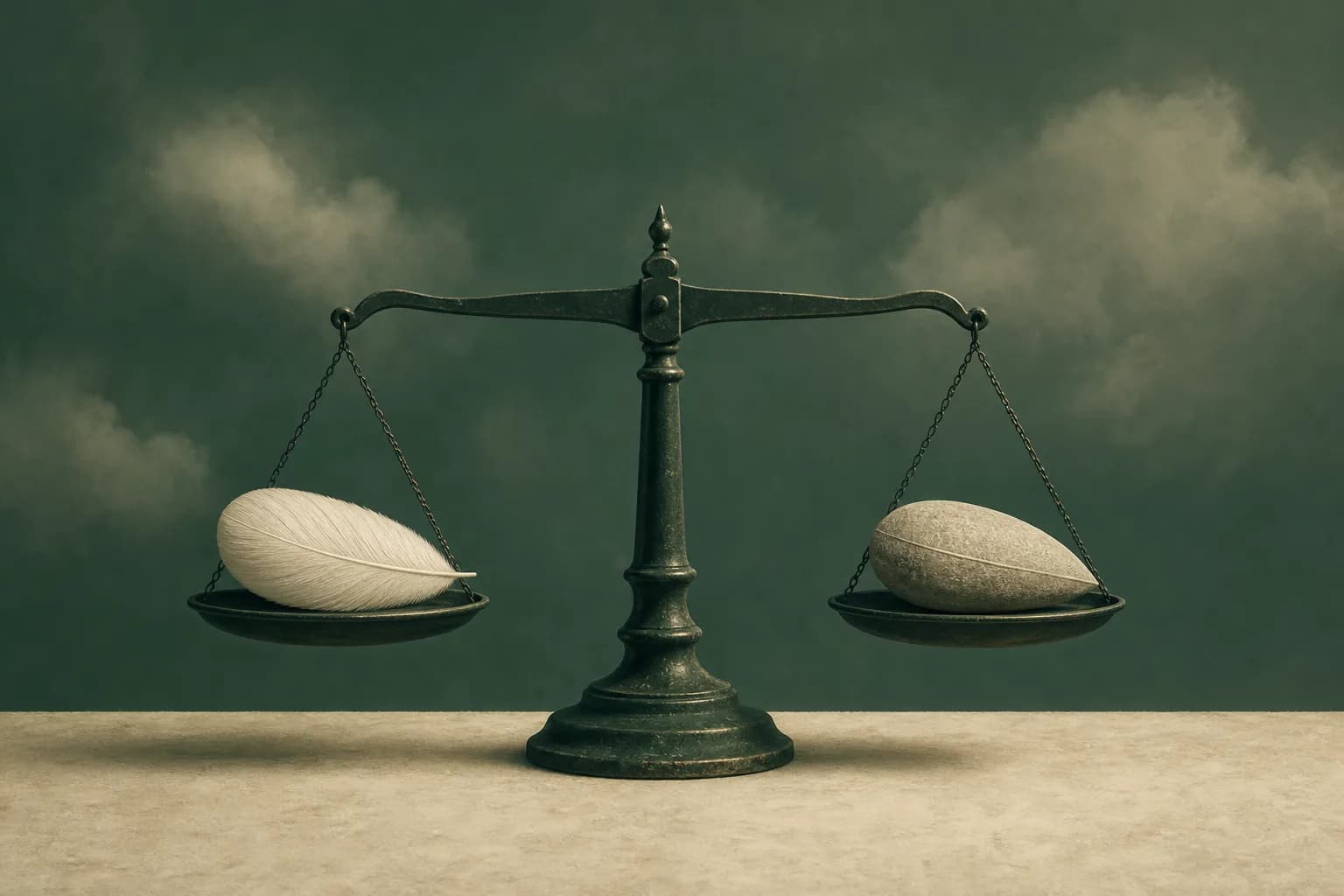
A friend forgets your birthday. Annoying, but fine, people are busy. A friend tells a small lie about where they were on your birthday. Suddenly it is two a.m. and you are rereading old messages, recalculating the entire friendship.
Both are minor offenses. Why did one bounce off and the other burn?
Now flip it. Somewhere out there, someone would have shrugged at the lie and been genuinely wounded by the forgotten birthday, because forgetting signals you are not held in mind, and to them, being held in mind is the entire currency of friendship.
The difference between you and that person is not sensitivity. It is the hidden hierarchy of your moral foundations, and that hierarchy is running your relationships like an unpaid judge.
Every person is a different courtroom
Moral psychology has shown that human moral judgment runs on several distinct foundations: care, fairness, loyalty, authority, sanctity, liberty. Your personal weighting of these foundations does not just shape your politics. It writes your private sentencing guidelines.
An offense that violates your top foundation gets tried as a felony. The same offense against your weakest foundation gets tried as a parking ticket, if it gets noticed at all.
High-fairness people can forgive almost anything except being played. High-loyalty people can absorb bluntness, flakiness, even cruelty, but one act of side-taking against them and something permanently closes. High-care people forgive chaos and disrespect but never forget the moment you were cold to someone vulnerable. High-liberty people barely register a broken rule but experience a controlling request as a kind of violence.
None of these courtrooms is objective. Each one is convinced it is.
The double standard you can't see
Here is where it gets personally uncomfortable. Your sentencing guidelines also apply to your own behavior, and they apply with the same skew. You go easy on your own violations of foundations you weight lightly, and you cannot understand why others are so upset about them.
The chronically late person is not evil. Punctuality lives on foundations, respect, reciprocity, that sit low in their hierarchy, so their own lateness genuinely feels trivial to them. The blunt friend who "just says what everyone is thinking" is not cruel. Care sits below honesty in their courtroom, and they sincerely experience their bluntness as a moral act.
This is the engine of a thousand relationship stalemates: two people each convinced they are owed an apology, each measuring the debt in a currency the other does not recognize. The fight is unwinnable because it is not one fight. It is two different verdicts from two different courts, and neither party has ever seen the other's law books.
Reading your own guidelines
You cannot make your judgment neutral. No one can. But there is an enormous difference between a judge who knows their biases and one who mistakes them for the law.
Mapping your moral foundations shows you your actual hierarchy, which offenses you are structurally prone to over-punish, which harms you are prone to excuse, and why certain people in your life keep receiving verdicts that baffle them. It also decodes the reverse: the times you were sentenced harshly for something that felt innocent. You were tried in a courtroom you did not know existed, under laws you have never read.
The next time you feel that disproportionate surge, the fury or the ice, over something objectively small, pause and ask: which foundation did this violate? The answer says more about your moral fingerprint than about the crime.
Better yet, get the whole fingerprint mapped. Judges who know their own guidelines still judge, but they judge on purpose.
Turn insight into a personal profile
See how this pattern shows up in you
Take a related BeliefScope assessment for a structured result and an optional deeper report.
Related Insights

What You'd Sacrifice First Says Everything About You
When values collide, the order in which you surrender them reveals your true hierarchy. Most people discover theirs by accident. You can find out on purpose.

The 5 Invisible Rules You Live By (And Never Agreed To)
You are following moral rules you never chose, installed before you could object. Here is how to finally read the contract you have been signing daily.

Your Moral Compass Has a Blind Spot. Here's Where It Hides
Every moral intuition that guides you also conceals something. Find the foundation you undervalue, and you will find the conflicts you keep repeating.