
Why political labels feel harder to use right now
Political labels still matter, but many people need more than a left-right shortcut to describe their values.
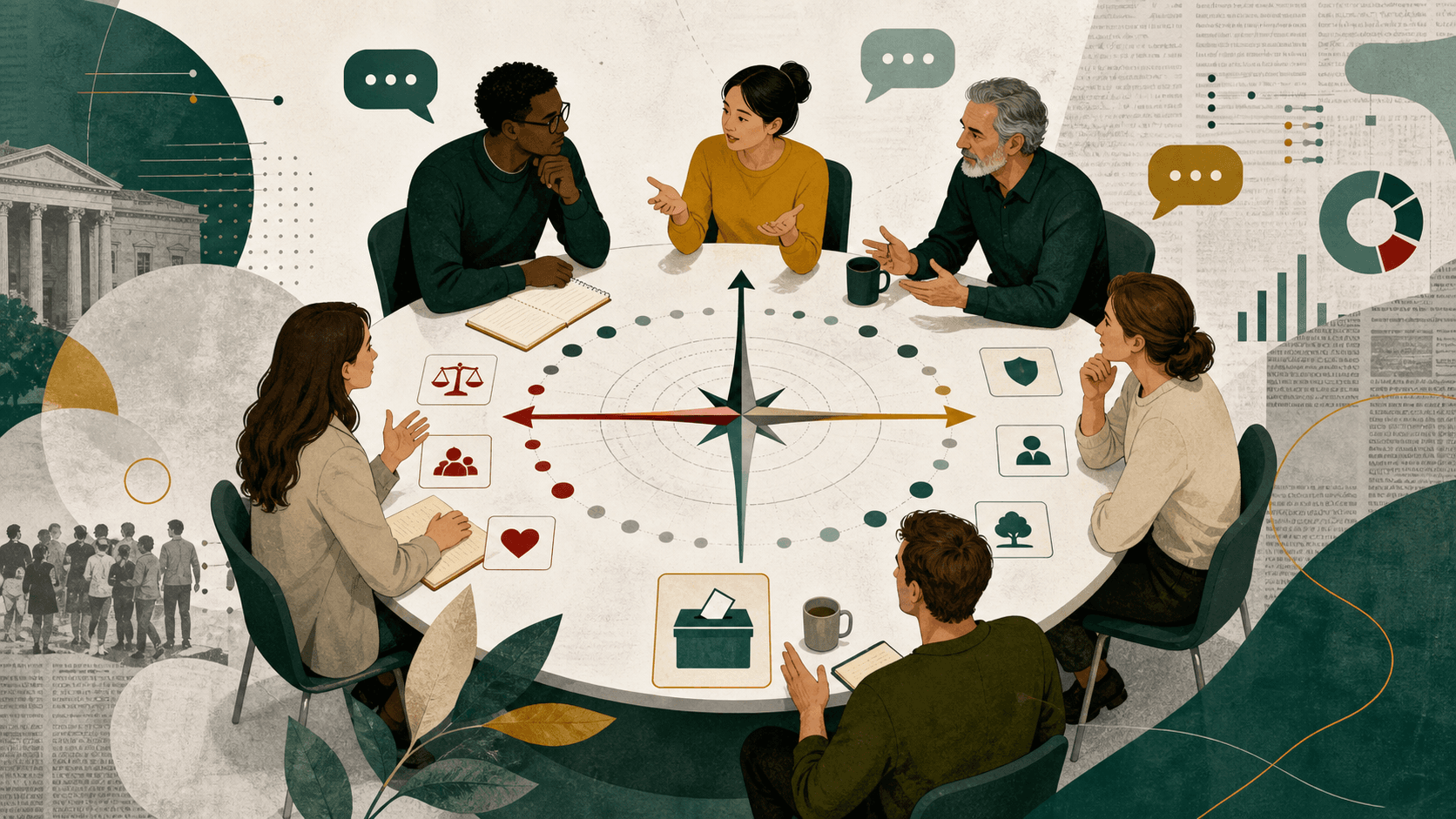
Political labels can be useful shortcuts. They help people signal values, find communities, and understand where they roughly stand in a public debate. But shortcuts become frustrating when the map underneath them changes.
That is why many people now feel that familiar labels do not quite fit. The words remain the same, while the issues, alliances, and emotional meaning around them keep moving.
Labels compress too much
A single label often tries to summarize views about economics, culture, authority, identity, foreign policy, technology, and trust. Two people may share one label and disagree deeply on several of those dimensions.
This is especially visible when someone is economically left but culturally cautious, socially liberal but institutionally skeptical, or pro-market but worried about corporate power.
Politics is becoming more dimensional
Many people do not experience politics as one clean left-right line. They experience it as several axes:
- Economic fairness and market freedom
- Personal liberty and social order
- Tradition and change
- Local belonging and global cooperation
- Trust and distrust in institutions
When those axes move independently, old labels start to feel cramped.
Identity changes the meaning of policy
Policy positions are not only technical. They also signal belonging, status, fear, hope, and moral priority. A debate about speech, borders, taxes, or public health may carry different emotional meanings for different groups.
That does not mean labels are useless. It means they need context. Asking "what do you mean by that label?" is often more revealing than assuming everyone uses the word the same way.
Better questions than "which side are you on?"
If you want to understand your own politics more clearly, try asking:
- What should individuals decide for themselves?
- What should communities protect together?
- When should institutions be trusted?
- What kinds of change feel necessary, and what kinds feel reckless?
- Which value would you defend even when it is inconvenient?
These questions create a clearer picture than a label alone.
Use labels lightly
A political label can still be a helpful starting point. It should not be the end of the conversation.
The healthier move is to treat labels as summaries that need explanation. Your real political profile lives in the values, tradeoffs, and priorities underneath the word.
Turn insight into a personal profile
See how this pattern shows up in you
Take a related BeliefScope assessment for a structured result and an optional deeper report.
Related Insights

Why You Can't Name Your Own Politics Anymore (And What That Says About You)
Millions of people no longer fit the labels they grew up with. Here is what political homelessness really means, and how to map where you actually stand.
The One Question That Predicts Your Politics Better Than Any Debate
Forget the hot takes. Political psychologists keep finding that a single underlying question splits people more reliably than any policy fight.

5 Signs Your Political Opinions Aren't Actually Yours
Inherited views feel identical to chosen ones, until you test them. These five signs reveal whether your politics are yours or just borrowed.